
The Triangle · 6 min read · February 13, 2026
The Triangle house style — what it actually is
After two years staging across Durham, Raleigh, Chapel Hill, and Cary, here's our working theory of what the Triangle home wants to be.
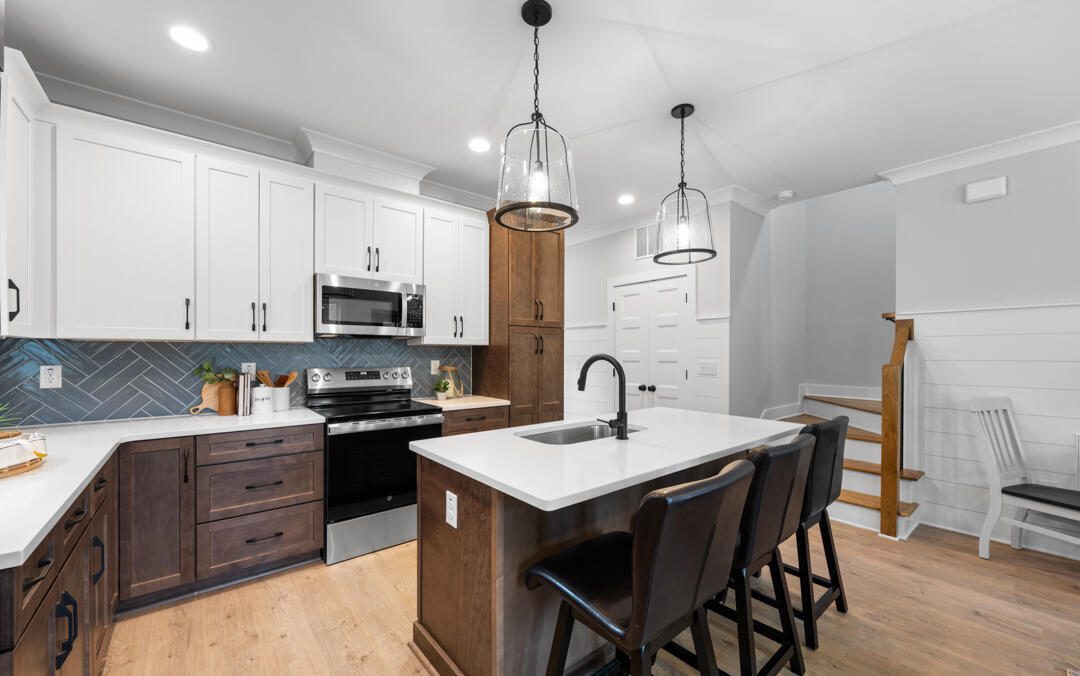
The Triangle isn’t one architectural style — it’s at least six. Mid-century ranches in West Durham, brick traditionals in Hope Valley, infill modern in Watts-Hillandale, mill-house bungalows in West End, ranch-suburban in Cary, and whatever gets built next year in Holly Springs. None of them photograph the same.
But they share a substrate. Triangle homes are mostly made of brick, oak, pine, and Carolina sky. The light is warm and long. The summers are humid. The trees are old. People here cook, garden, walk, sit on porches. A house that doesn’t accommodate at least three of those things reads as foreign to a Triangle buyer.
That’s not a style — it’s a constraint. Within it, you can do almost anything. We’ve staged a midcentury ranch in Forest Hills with deep terracotta walls and brass everywhere; we’ve staged a 1930s brick traditional in Trinity Park with white walls, bare oak floors, and almost nothing on the surfaces. Both photographed beautifully because both worked with the light, the materials, and the idea of how Southern people actually live.
What doesn’t work: turning a Triangle home into a Brooklyn loft, a Joshua Tree desert house, or a Scandinavian apartment. We see this all the time on staged listings. The home reads as a costume — and the photographs feel like rentals rather than homes.
Our working rule: stage and design for the way the Triangle actually feels in October. Mornings on the porch, oak floors, a pot of something on the stove. Honest materials, layered textures, light that earns its keep. If the house wouldn’t make sense as itself in October, it’s the wrong stage.