
Design · 4 min read · March 21, 2026
Why we don't do gray
Cool gray dominated American interiors for a decade. We never used it. Here's why warm whites win.
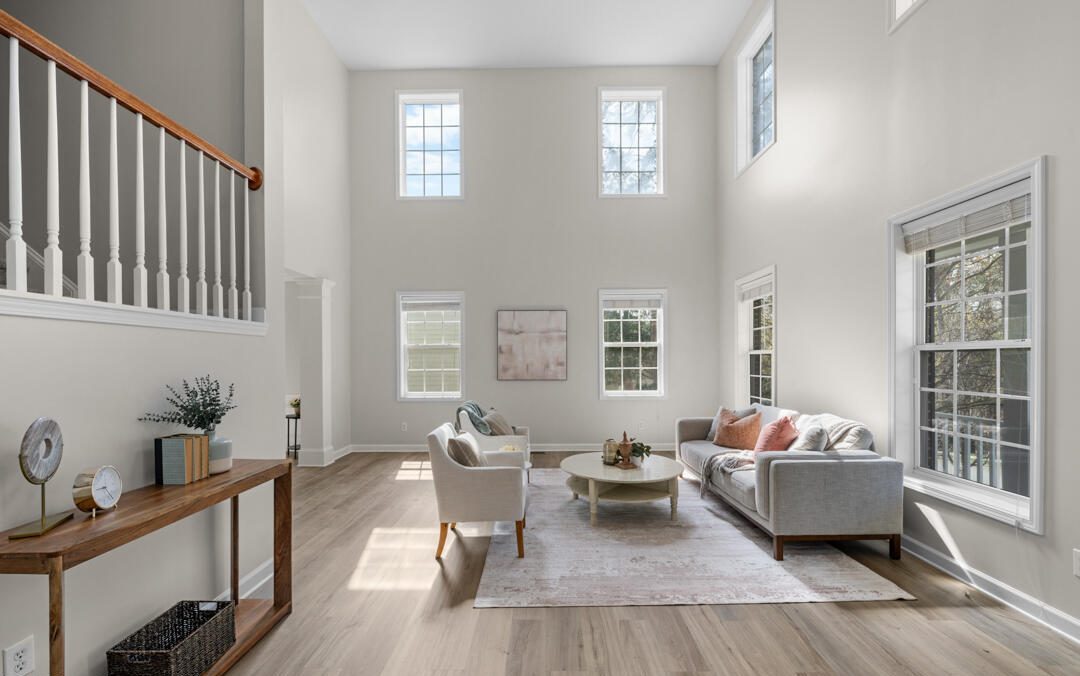
The 2010s through early 2020s were a gray decade. Walls, floors, sofas, the works — a single cool palette imported from Scandinavian mood boards onto American flip houses. It was easy to specify, easy to execute, easy to photograph. And it left every house looking the same.
We’ve never used cool gray. Not because we’re contrarians, but because cool gray photographs harder than warm white in the kind of southern light Triangle homes get. Eight months of the year, light here is warm — golden mornings, long amber afternoons. Cool gray walls fight that light; warm whites and creams settle into it.
The other reason: gray-on-gray flattens material. An oak coffee table on a warm-white wall looks like oak. An oak coffee table on a cool-gray wall looks like driftwood. The wood gets read as monochrome instead of as material. This is the difference between a room that photographs well and a room that is well — gray photographs fine in real estate listings; warm white aged through a season looks like a home.
Our specs default to Benjamin Moore’s White Dove (OC-17) for trim and Simply White (OC-117) or Sea Pearl (OC-19) for walls depending on the orientation of the room. North-facing walls get the slightly warmer one. South-facing walls take the cooler. Neither is ever cool gray.